


Development work: Our progress in the Sapana Library
When you hear the term “development work”, you may think of large projects, international organisations or long-term strategies. But development work can also start on a small scale: with conversations, tidying up, repairs, home visits, listening.
During his time at the Sapana Community Library in Khoramukh, our Nepalese team member Sushil experienced exactly that: development work as a living, human process. This article aims to show you, from his perspective, how diverse, challenging and at the same time fulfilling development work can be – especially in a rural region of Nepal, where every change is immediately visible.
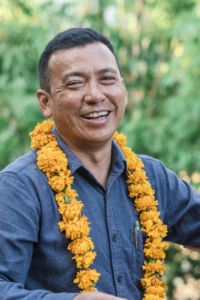
Development work in Nepal: Preparation and initial introduction
My work schedule had already been set before I arrived in Khoramukh. I knew what tasks I would be facing, but I didn’t know how challenging the work on site would be and how much it would help me grow.
Before I started, I mentally prepared myself for my tasks, sorted out open issues and prepared to remain flexible. Because that is an important part of development work: things rarely turn out as planned.
Shortly after my arrival, I met Santosh, the coach of the library team. We talked a lot about his work, the library’s statutes and how we could work together to make the library more effective. An important topic was the question of how we could appeal more to young people so that they would not move to the city due to a lack of prospects. It is precisely these kinds of conversations that show how strategic and at the same time everyday development work can be.
Development work in the village: listening as the most important step
A few days after my arrival, I began visiting the surrounding villages: Rivan, Lumre, Gairigaun and others. I wanted to know what people thought about books, what they said about education and how they perceived the library.
It became clear to me that development work does not begin in an office, but in conversations between people.
Many knew about the library, but not everyone knew what it had to offer. Some talked about how valuable education is for their children. Others explained that they hardly find time for books because of work, household chores or a lack of reading habits. These conversations opened doors and helped us to better understand the needs of the villagers.
For me, this was one of the most important moments: seeing how much development work can be achieved by really listening.
Development work in concrete terms: what we have tackled and achieved
1. A new roof for the children’s ward
During the rainy season, water repeatedly leaked through the roof of the children’s section. Books got wet, the paint peeled off, and the children were unable to use the room.
That is why we:
– completely renovated the roof
– replaced the windows
– installed two additional roofs at the entrances
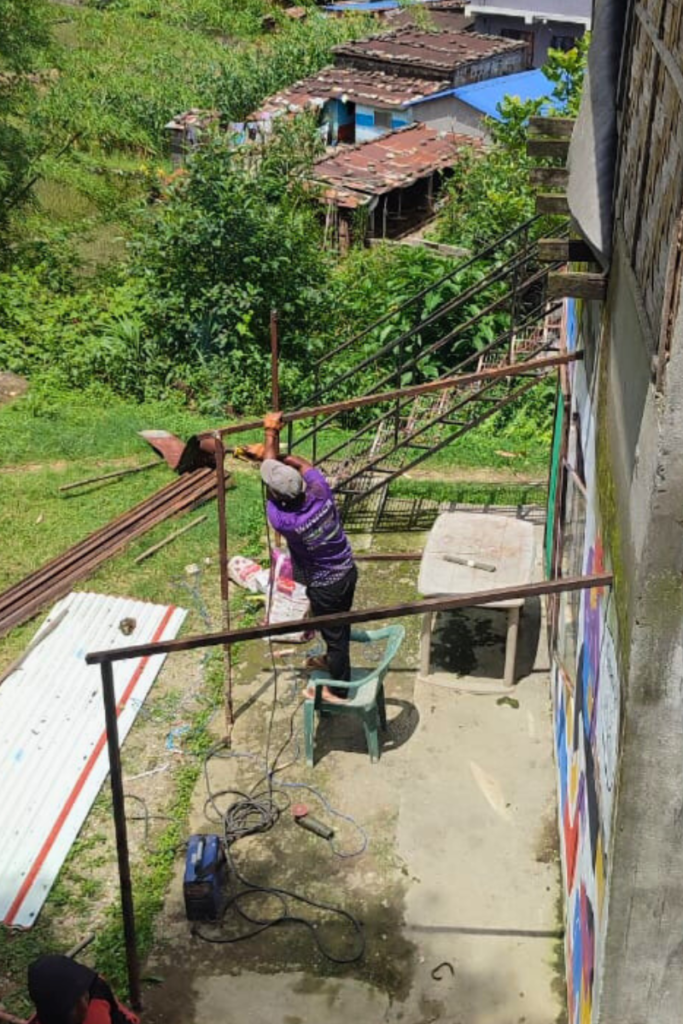
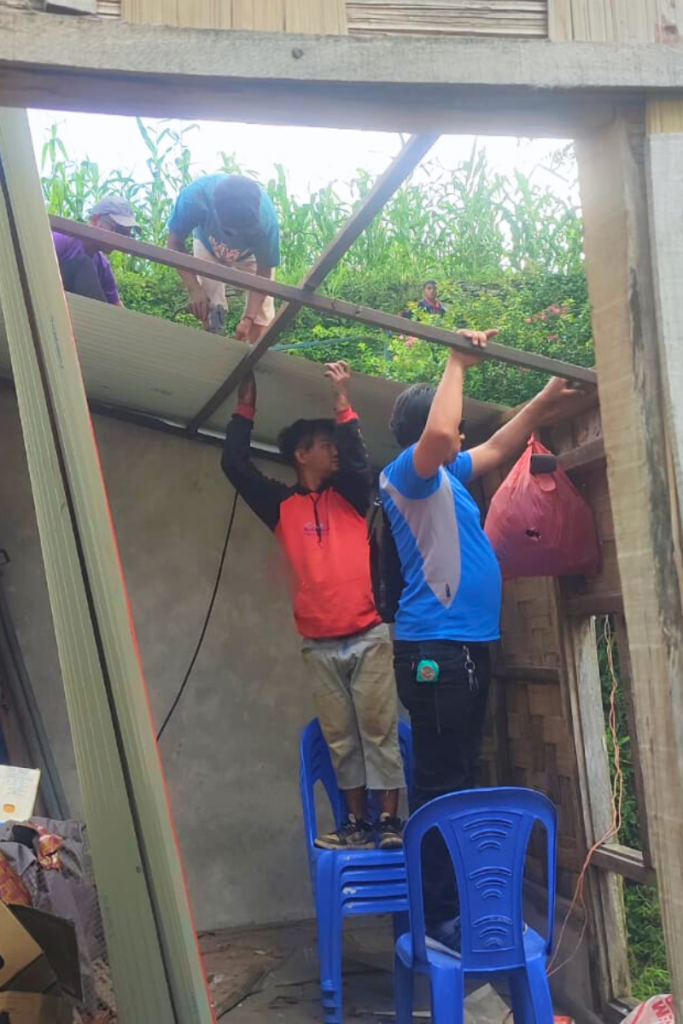
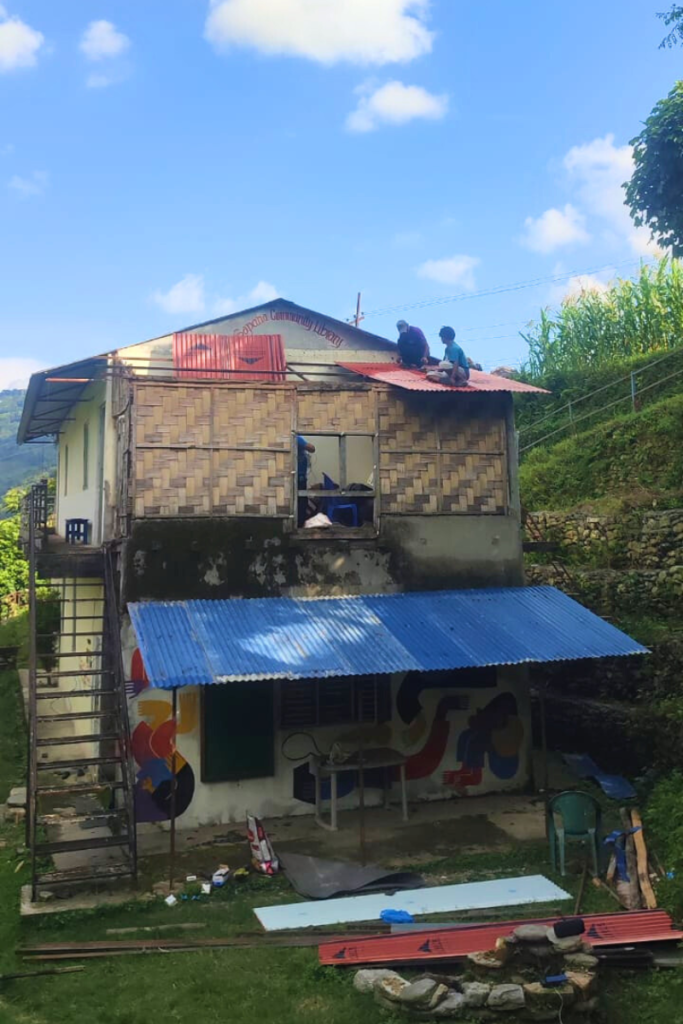
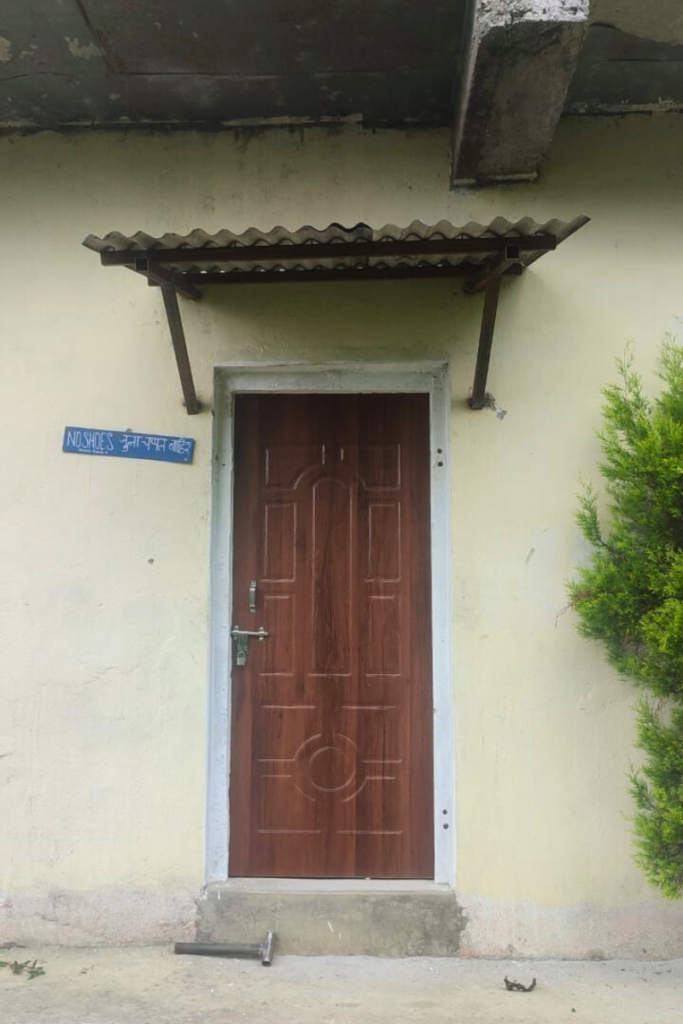
The result is a dry, child-friendly space that is now being used again every day. Sometimes, development work simply means repairing a roof so that learning can take place at all.
2. A community survey – to understand what people need
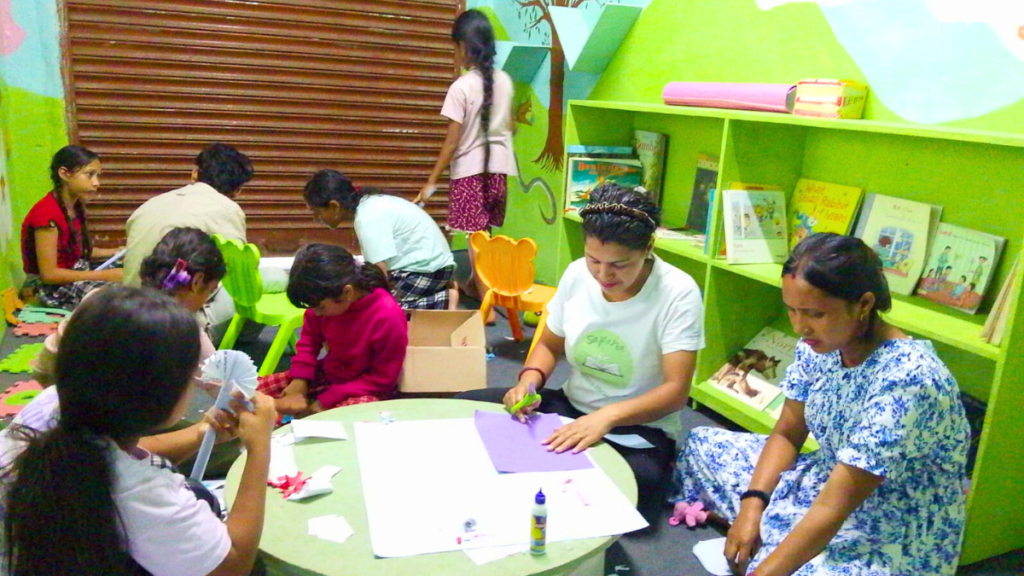
To ensure that development work does not bypass the people, real data and honest feedback are needed. That is why we conducted a 2-3 day community survey.
We collected:
– 30-40 fully completed questionnaires
– Impressions from personal conversations
– Feedback on the library
– Residents’ wishes
The goal: to understand how the library works and what the population wants. We will use the results to determine the next steps.
At the same time, I visited teachers and encouraged them to reactivate the readers’ clubs in schools. The response was positive – the schools showed genuine interest.
3. Analysis of social media usage in Khoramukh
In order to better reach people, we wanted to find out which channels they actually use.
The result:
– Facebook is the most important medium.
– TikTok is becoming increasingly popular, especially among young people.
– Local radio remains a relevant channel of information.
This will enable us to build a targeted social media campaign in the future – not alongside it, but exactly where people really are.
4. Improving the quality of library work
An important aspect of my development work was to examine how the team works and how we can strengthen it.
The focus was on:
– How the librarians organise their daily work
– How Santosh fulfils his role as coach
– Where motivation and structure are lacking
– Where support is needed
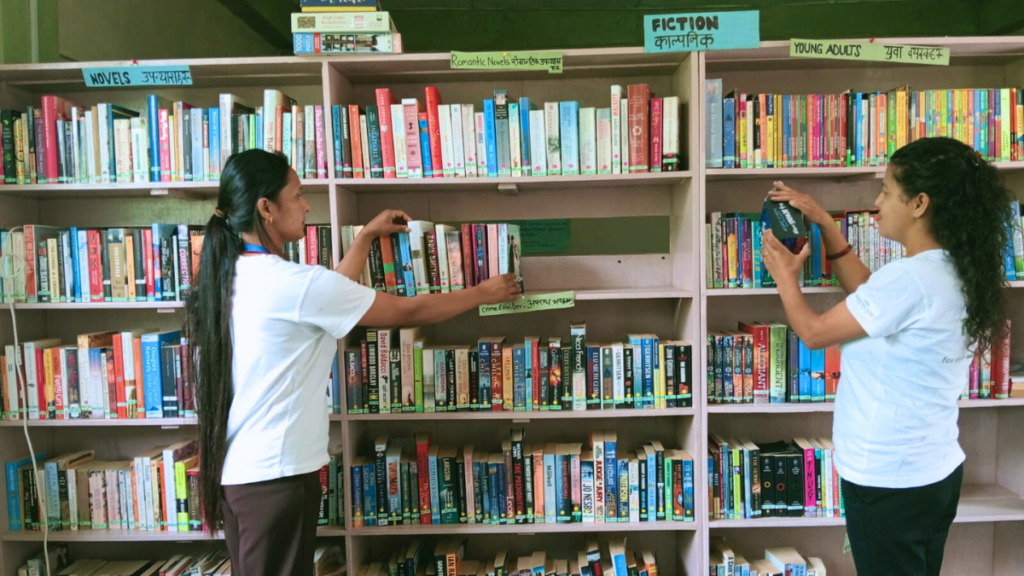
We had honest discussions about cleanliness, responsibilities and priorities. This discussion is important because without a motivated, well-supported team, no library can be effective in the long term.
In addition, we introduced a new habit: 30 minutes of daily reading time for the team. Because if you want to inspire others to read, you have to read yourself.
5. Improving safety: small things that matter
Another practical topic was connecting mobile phones to the library’s security camera. This may sound minor, but security is an important aspect of operational management. Now the team can monitor at any time to ensure that everything is in order, especially in the evenings or during power outages. The team also discussed how to handle situations involving children who are not following the library rules.
6. The book donation box reimagined
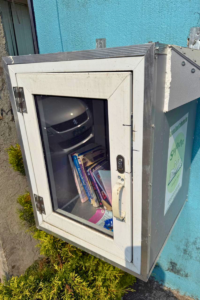
At first, our book donation box yielded hardly any results. Instead of prematurely declaring the project a failure, we analysed the situation and adjusted our approach: we moved the box to a more frequented location, made it more visible and worked together to develop new ideas to appeal more strongly to people. This process of trial and error, adjustment and further development is also development work – learning, reacting flexibly and persevering.
7. Door-to-door visits: spreading knowledge, building trust
During my time in Nepal, door-to-door visits continued. We reached hundreds of households and spoke to people about:
– The importance of reading
– What the library has to offer
– The benefits for children and adults
Many said they had never visited a library before. Others said they were ashamed because they could not read. Some were surprised to hear that the library is free and open to everyone.
These visits are one of the most powerful forms of educational and development work: they create connection, understanding and trust.
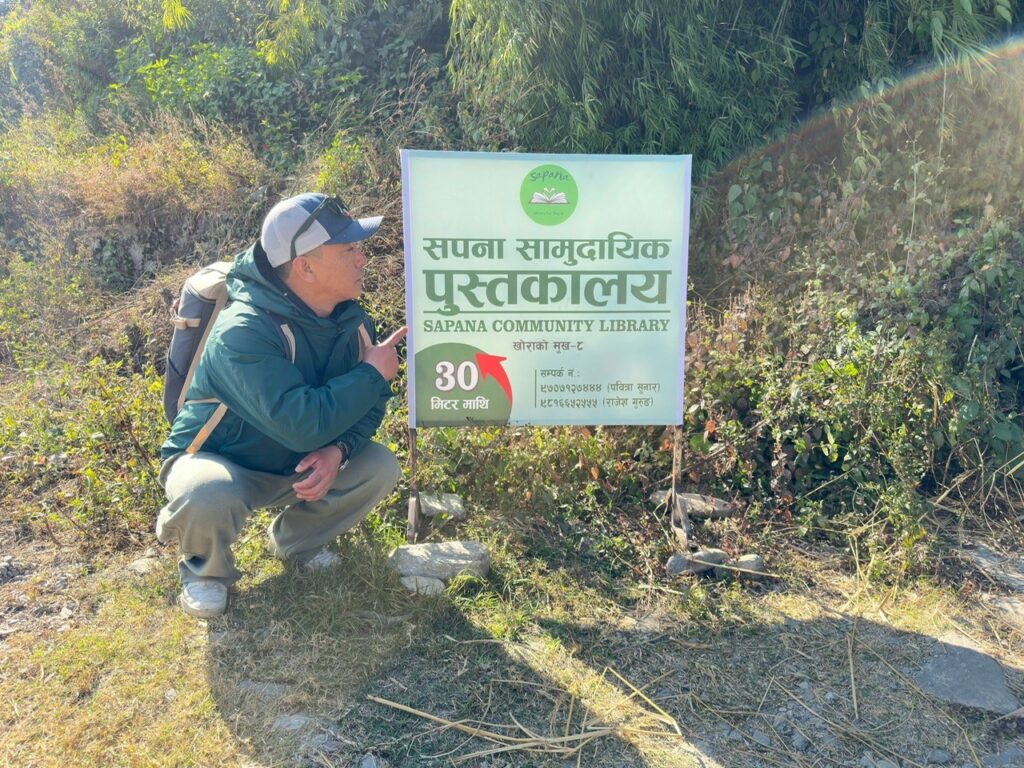
8. New sign: greater visibility, greater impact
To further facilitate access to the library, a signpost has been erected on the street, clearly marking the way. Such signposts help to attract attention, improve orientation and enable spontaneous visits. Increased visibility means that more people can become aware of the library – a simple but effective step towards sustainably strengthening its reach and use.
What I learned through development work in Nepal
Towards the end of my stay, I spoke a lot with the team about cleanliness, motivation and long-term change.
I learned that:
– Change takes time.
– Small steps have a big impact.
– Listening connects people more than any lecture ever could.
– Challenges are part of the process.
– It’s okay to be proud, even if everything isn’t perfect.
Conclusion: Development work means giving your best
After this intense period, I can say that development work is not about delivering perfect solutions. It is about giving your best – with open eyes, an open heart and a willingness to learn something new every day.
I leave this period feeling grateful and fulfilled, because I know that I have given my best.
Similar articles
- Development work: Our progress in the Sapana Library
- Promoting Reading in Nepal: Doorstep Visits by the Sapana Library

- The library’s current splendor: A glimpse of its diversity and dynamism
- Between letters and enthusiasm: Our November 2023 before and after the library opening
- Colourful October 2023: Jacqueline’s perspective on our progress
door-to-door visits, education, library staff, Nepal, promoting reading